Horse Racing Betting for Beginners: A UK Starter Guide
 Available in US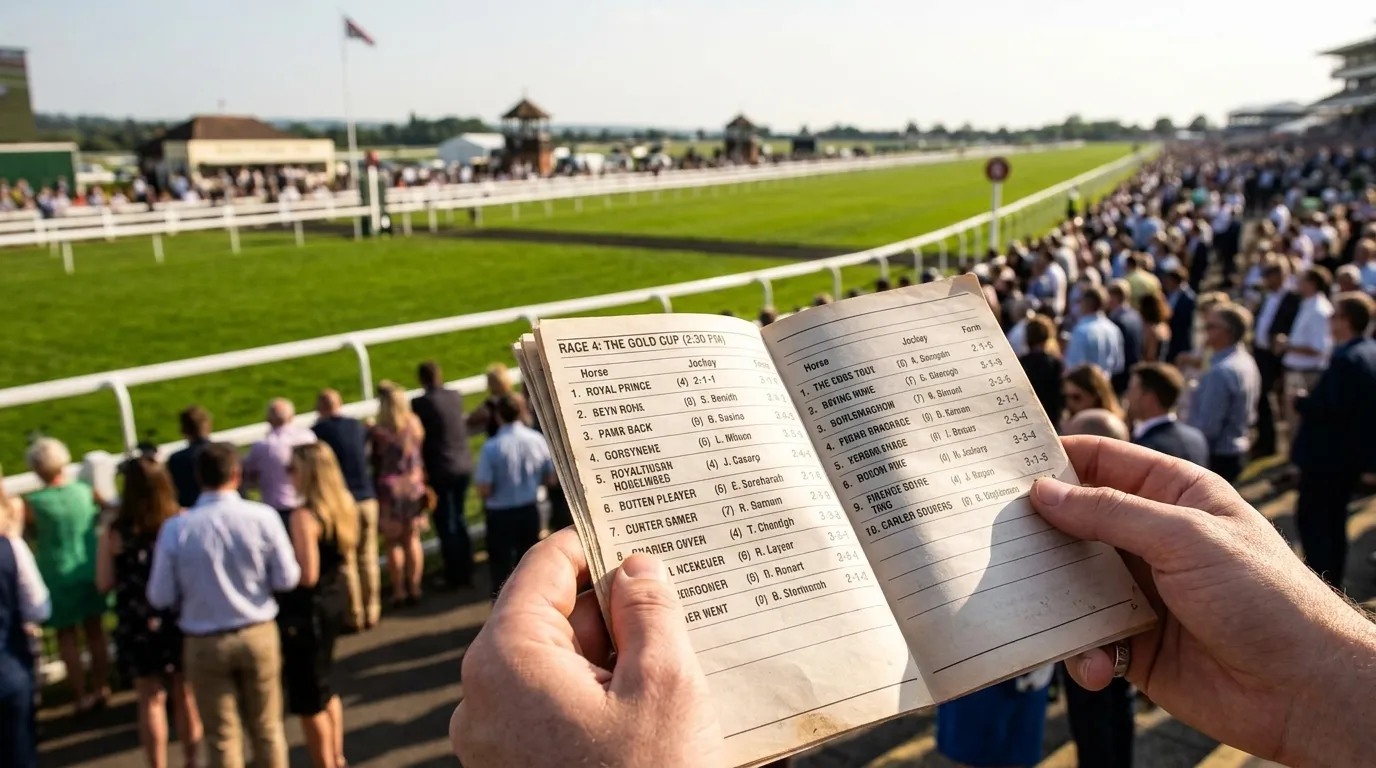
Horse Racing Betting in the UK Starts with Understanding the Basics
My first horse racing bet was a disaster. I picked a name I liked — something with “Gold” in it — put a fiver on, and watched it finish last of twelve. I had no idea what a racecard was, couldn’t tell you the difference between a handicap and a novice chase, and genuinely thought odds of 3/1 meant the horse had a three-in-one chance of winning. Nine years later, I analyse UK in-play markets for a living. The gap between that first clueless punt and what I do now isn’t talent — it’s information.
Roughly 15% of UK adults place at least one bet on horse racing every month, and in the 25 to 34 age bracket that figure hits 32%. You’re joining a crowd, but most of that crowd never bothers to learn how the game actually works. This guide gives you the foundation: how to open an account, how to read the information the industry publishes for free, and how to place your first bets without making the expensive mistakes I made.
Horse racing betting in Britain has a structure. There are rules, conventions, and publicly available data that exist specifically to help you make informed decisions. The bookmakers would rather you didn’t use any of it — but that’s exactly why you should.
Opening a Betting Account: What You Need
Before you can place a bet online, you need a verified account with a licensed operator. The UK has 24.4 million active online gambling accounts, so the process is well-oiled — but it still has requirements you need to prepare for.
Every UKGC-licensed bookmaker will ask for your full name, date of birth, address, and a form of photo identification. This is standard Know Your Customer procedure required by the Gambling Commission, not an optional extra. Typically, a passport or driving licence does the job. Some operators verify your identity electronically using credit reference agencies, which means you might not need to upload a document at all — but have one ready just in case.
You’ll also need a payment method. Debit cards are the standard; credit cards have been banned for UK gambling since April 2020. Bank transfers, e-wallets, and prepaid cards are alternatives, depending on the operator. Minimum deposits usually sit between five and ten pounds.
One thing that surprises new punters: you may encounter deposit limit prompts or affordability questions earlier than you’d expect. The Gambling Commission has tightened these requirements significantly, and operators now monitor spending patterns from the very first deposit. Don’t be alarmed — it’s regulatory compliance, not personal suspicion. Set a deposit limit you’re comfortable with from day one. You can always adjust it later, though increasing it may involve a cooling-off period.
How to Read a Racecard Before Placing a Bet
The racecard is where everything starts, and ignoring it is the fastest route to losing money. Every race published in the UK comes with a card that lists every runner, its form, the jockey, the trainer, the weight carried, the draw position on Flat races, and — crucially — a string of numbers and letters that tells you how the horse has performed recently.
Those form figures read from left to right, most recent last. A “1” means the horse won its last race. A “2” means second place. A “0” means it finished outside the top nine. Letters carry specific meanings: “F” is a fall, “U” is unseated rider, “P” is pulled up, and “C” means carried out. So a form line reading “32104” tells you: third, second, first, tenth-or-worse, and then fourth in its most recent outing. That’s a horse with ability but inconsistent finishing.
Beyond form figures, the racecard shows each horse’s official rating — a number assigned by the handicapper that reflects its assessed ability. Higher-rated horses are theoretically better, but they also carry more weight in handicap races, which is designed to equalise the field. The trainer and jockey columns matter too: certain trainers have strong records at specific courses, and a booking of a top jockey on an otherwise unfancied runner is often a market signal worth noting.
You don’t need to master all of this before your first bet. But glance at the form figures, check whether the horse has won recently, and look at the going preference — some horses perform better on soft ground, others on firm. That five-minute scan puts you ahead of every punter who picks on name alone.
Your First Bets: Win, Each-Way, and Accumulator
Three bet types cover ninety percent of what beginners need to know, and the good news is that none of them require a mathematics degree.
A win bet is exactly what it sounds like: you pick a horse, you stake your money, and if it finishes first, you get paid at the odds you took. Stake ten pounds at 5/1, horse wins, you receive sixty pounds — fifty profit plus your ten pound stake. If the horse finishes second, third, or anywhere else, you lose your stake. Simple, clean, no ambiguity.
An each-way bet is two bets in one. Half your stake goes on the horse to win, half goes on it to finish in the places — typically the top two, three, or four depending on the number of runners and the race type. The win part pays at full odds if the horse wins. The place part pays at a fraction of the odds, usually one quarter or one fifth. So a ten pound each-way bet actually costs twenty pounds: ten on win, ten on place. If the horse finishes second, you lose the win portion but collect on the place portion. Each-way is particularly useful in big-field handicaps where picking the exact winner is difficult but identifying a horse that will finish near the front is more achievable. For a detailed breakdown of how each-way payouts and place terms work, that’s a separate conversation worth having once you’re comfortable with the basics.
An accumulator bundles multiple selections into one bet. All of them must win for you to collect. The odds multiply together, which is why accas produce those eye-catching potential payouts — but the probability of all legs winning drops sharply with each addition. A four-fold accumulator with each selection at 2/1 offers a combined price of 80/1, but the implied probability of landing all four is barely over one percent. Accumulators are fun for small stakes. They are not a strategy.
Common Beginner Mistakes to Avoid
After nine years watching people start their betting journey, I see the same errors on repeat. The first is chasing losses — placing a bigger bet to recover what you just lost. This is how a twenty pound afternoon becomes a two hundred pound one. Set a budget before you start, and when it’s gone, stop. Tomorrow’s card is a fresh opportunity.
The second mistake is ignoring the going. Ground conditions change the race. A horse with a perfect record on good-to-firm ground can struggle horribly on heavy going, and no amount of good form compensates for unsuitable conditions. Check the going report before every race — it takes ten seconds and eliminates a whole category of bad bets.
Third: betting every race. There might be thirty races on a Saturday card across six meetings. Nobody has an informed view on all of them. Professionals are selective — they might bet on three or four races in a day and skip the rest entirely. Having no bet is a valid position, and it’s always more profitable than a poorly reasoned one.
Finally, don’t confuse short odds with certainty. Favourites win roughly 34% of all UK races. That means they lose two-thirds of the time. A horse priced at 4/6 is not a safe bet — it’s a bet the market considers most likely, but “most likely” still means it loses more often than it wins. Respect the probabilities. They don’t care about your confidence levels.
Beginner Betting Questions Answered
What is the minimum bet on UK horse racing?
Most UKGC-licensed online bookmakers set a minimum stake of between 10p and one pound per bet. The exact minimum varies by operator and bet type. In betting shops on the high street, the minimum is typically 50p or one pound. There is no universal legal minimum — it is set by the operator.
Do I need to verify my identity before placing a horse racing bet?
Yes. All UKGC-licensed operators must verify your identity before allowing you to withdraw winnings, and many now verify before you can even place your first bet. You will typically need to provide a passport or driving licence and proof of address. Some operators verify electronically using credit reference data, which can make the process almost instant.
How long does it take to withdraw winnings from a horse racing bet?
Withdrawal times depend on the payment method. E-wallets are usually the fastest, often processing within a few hours. Debit card withdrawals typically take one to three working days. Bank transfers can take up to five working days. Some operators offer faster processing for verified accounts with established withdrawal histories.
Prepared by the Live Betting Horse Racing editorial staff.