Epsom Derby Betting: Live Odds, Course Dynamics, and Classic Contender Data
 Available in US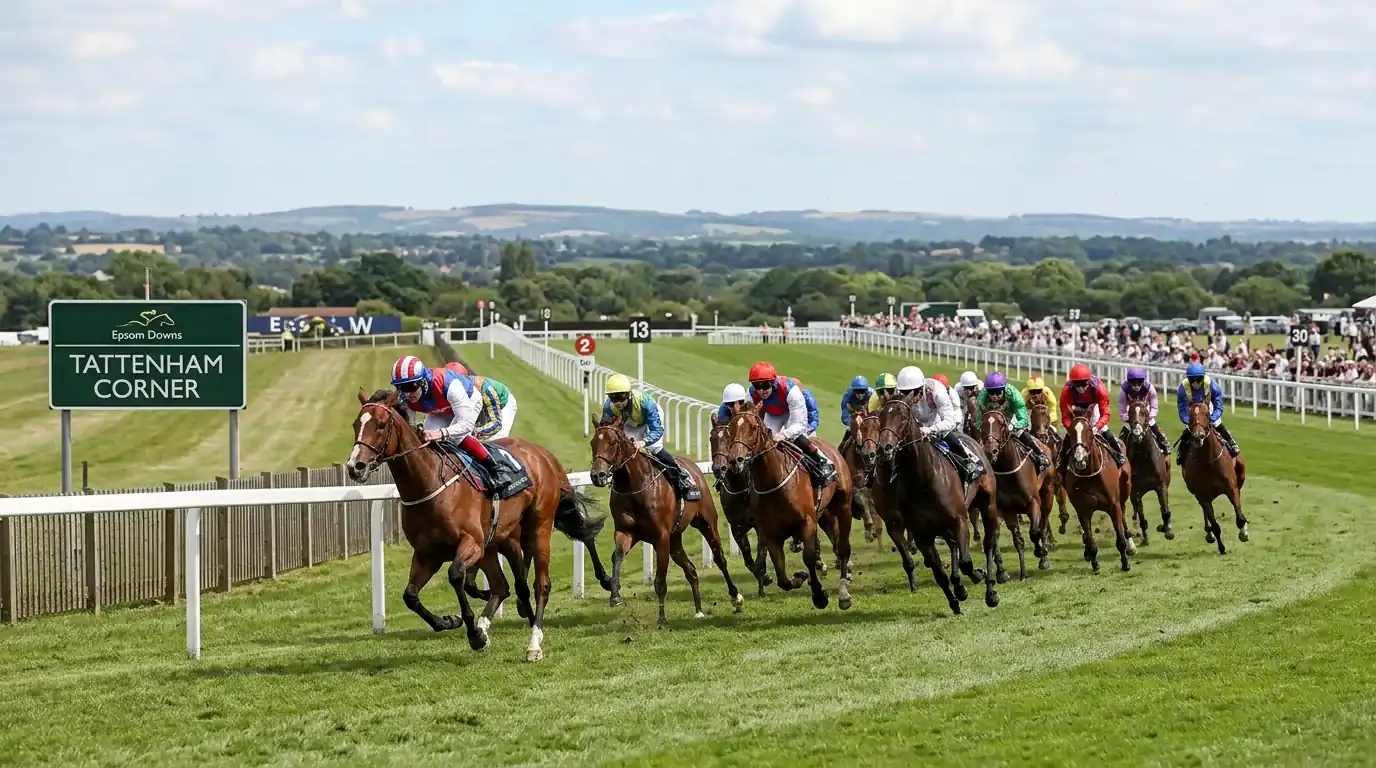
The Derby’s Unique Course Makes It One of the Hardest UK Races to Bet
Epsom is unlike any other racecourse in Britain. The camber, the undulations, the downhill run to Tattenham Corner, and the left-handed turn into a relatively short straight create a test that no trial race fully replicates. I’ve watched Derby winners come from impossible positions and seen odds-on favourites fail to handle the terrain. UK racecourse attendance hit 5.031 million in 2025, and a disproportionate share of that number packs into Epsom on the first Saturday of June to witness a race that baffles the form book more often than any other Classic.
The Derby is the ultimate three-year-old examination, run over a mile and a half on a course that punishes physical or temperamental weakness. Betting on it requires a different analytical approach from any other race on the calendar — one that prioritises the course itself as a variable, not just the horses entered.
Epsom’s Camber and Its Effect on In-Play Odds
The course drops sharply from the top of the hill to Tattenham Corner, with a pronounced left-hand camber that causes horses to drift right. Jockeys who’ve never ridden the track before often struggle to maintain a straight line, and horses that are unbalanced by the slope lose position involuntarily. This topographical quirk creates an in-play market effect that’s unique to Epsom.
Coming down the hill, the in-play prices can be misleading. A horse in a prominent position at the three-furlong pole looks well placed, but if it’s racing on the unfavourable part of the track — too wide, or fighting the camber — its positional advantage evaporates at Tattenham Corner. Conversely, a horse that has been held up in the centre of the track, switching to the rail as the field turns for home, often produces a late surge that the in-play market has underpriced.
I watch for two specific in-play signals at Epsom. First, how a horse handles the descent. Runners that drop their head and lengthen stride going downhill are comfortable on the track; those that shorten stride or fight the jockey are not. Second, the position at Tattenham Corner. Horses on the rail at the turn have a shorter distance to run than those wide, and the saving of two or three lengths on the bend translates directly into finishing position in a race where margins are often tight. The in-play market doesn’t always price this positional advantage correctly, because the camera angles can make it hard for viewers to judge who’s on the rail and who isn’t.
How to Assess Classic Contenders From Trial Form
Derby contenders are assessed primarily through their spring trial races — the Dante at York, the Lingfield Derby Trial, the Chester Vase, and the Guineas at Newmarket. But none of these trials is run on a course that resembles Epsom, and that disconnect is the central challenge of Derby form analysis.
The Dante, run over ten and a half furlongs at York’s flat, galloping track, identifies horses with class and stamina but doesn’t test their ability to handle a camber or a downhill turn. The Lingfield trial is the closest topographical analogue — Lingfield has a left-hand turn after a descent — but the surface is all-weather, which produces a fundamentally different racing experience from Epsom’s turf. Chester’s tight turns bear no resemblance to Epsom’s sweeping curves.
What I’ve found more predictive than trial form is pedigree assessment and running style. Horses by sires whose progeny have historically handled Epsom — those with a record of producing Derby runners that complete the course well, regardless of finishing position — carry an advantage that pure form analysis misses. Running style matters too. Horses that settle quickly, travel within themselves, and accelerate when asked tend to cope with Epsom’s unique demands better than keen, front-running types that expend energy fighting the course.
Favourites win roughly 34% of all UK races, but the Derby’s favourite strike rate is historically lower than that baseline. The race’s idiosyncrasies — the course, the three-year-old inexperience, the mile-and-a-half trip that many contenders haven’t previously attempted — inject a level of unpredictability that depresses the favourite’s true probability below what the market typically prices. Opposing the favourite in the Derby is not contrarianism for its own sake; it’s a data-informed position.
Historical Derby Odds Patterns and What They Signal
The Derby ante-post market follows a distinctive seasonal pattern. Early prices in the winter book, published after the autumn two-year-old races, represent the market’s first attempt to price up three-year-old Classic contenders. These prices are necessarily speculative — the horses haven’t run over the Derby distance, many haven’t run beyond a mile, and the form from juvenile races is an imperfect guide to Classic ability.
The market crystallises through the spring trials. A dominant Dante winner typically sees their Derby price contract from double figures to single figures within 48 hours. A disappointing trial — a poor run at Chester or a laboured win at Lingfield — causes the horse to drift, sometimes dramatically. These post-trial price movements are the most informative signals in the ante-post market because they represent the integration of genuine new information, not just speculative money.
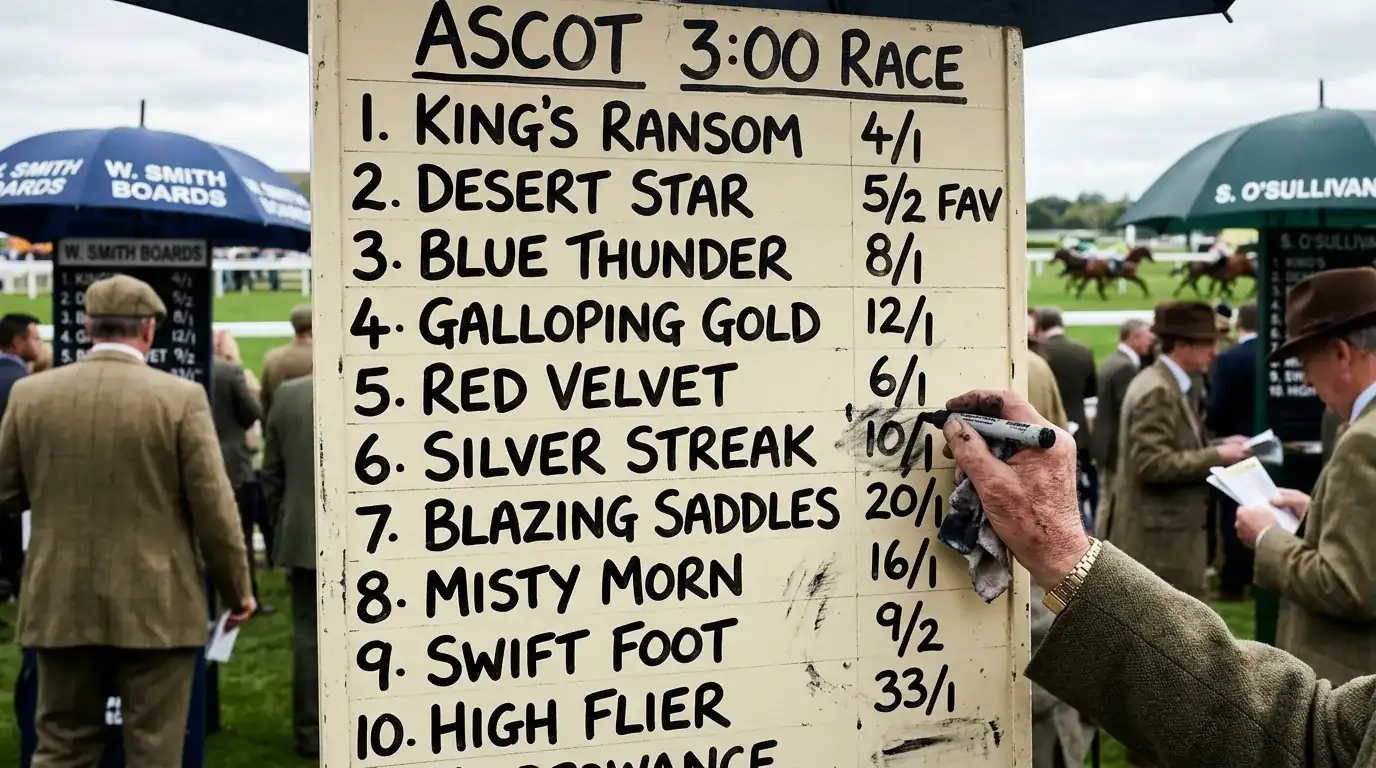
On race day, the Derby market often exhibits a specific pattern: one clear favourite at 2/1 or shorter, a couple of contenders at 5/1 to 8/1, and then a long tail of outsiders at 16/1 and beyond. The each-way value, if it exists, sits in the 10/1 to 20/1 range — horses with enough form to suggest competence over the trip and enough uncertainty about their Epsom credentials to keep their price longer than their ability warrants.
The draw is less significant at Epsom than at straight-course tracks, but a low draw — closer to the inside rail — offers a marginal advantage because it allows the jockey to save ground on the turn. In large Derby fields of fifteen or more, that saving can matter. For a broader understanding of how these pre-race factors feed into how UK odds are formed, the Derby is a case study in how course-specific variables create market mispricings.
Epsom Derby Questions Answered
How does the Epsom camber affect in-play betting dynamics in the Derby?
The pronounced left-hand camber causes horses to drift right on the descent to Tattenham Corner, which alters racing positions in ways the in-play market doesn’t always price correctly. Horses on the inside rail at the turn have a shorter distance to run, and those that handle the camber smoothly gain a positional advantage that translates into finishing position. In-play bettors who can read how each horse handles the slope have an edge over those relying solely on the television picture.
Is ante-post or race-day betting more profitable for the Epsom Derby?
Ante-post betting tends to offer better value for the Derby because the winter and early-spring prices reflect genuine uncertainty about which horses will handle Epsom’s unique course. By race day, the market has absorbed trial form and the prices compress. However, ante-post bets on the Derby carry significant non-runner risk because three-year-olds frequently miss intended targets due to setbacks. The optimal balance is to take ante-post prices on one or two strong candidates while reserving stakes for race-day each-way bets on any value that emerges after the morning market settles.
Created by the ”Live Betting Horse Racing” editorial team.