Royal Ascot Betting Guide: In-Play Odds, Key Races, and Flat Racing Data
 Available in US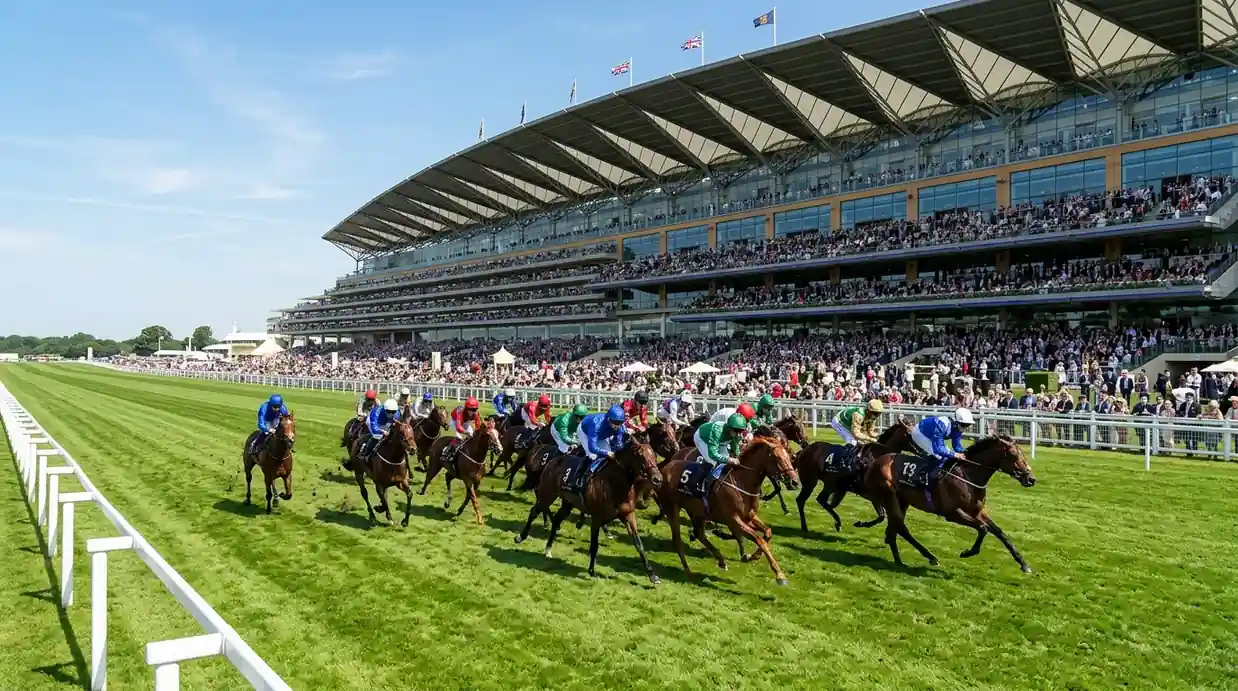
Royal Ascot Is the Peak of UK Flat Racing Betting
Cheltenham owns the jumps season. Royal Ascot owns the Flat. Five days in June at Berkshire’s straight-and-round course produce more Flat betting turnover than any other meeting on the calendar, and the 2025 renewal drew record crowds as racecourse attendance across the UK surpassed 5.031 million for the first time since 2019. The atmosphere is part garden party, part trading floor — and the betting market reflects that dual identity.
I’ve attended Royal Ascot in some capacity every year since 2018, and the betting dynamic never fails to surprise. The mixture of professional punters seeking value in the big handicaps and once-a-year bettors drawn by the pageantry creates pricing inefficiencies that simply don’t exist at an ordinary Tuesday card. Understanding which races offer genuine betting opportunity and which are better enjoyed from the grandstand is the foundation of any profitable Ascot week.
Key Races Across the Five Days
Royal Ascot runs thirty races across five days, ranging from the six-furlong King Charles III Stakes to the two-and-a-half-mile Ascot Gold Cup. Each day has at least one Group 1 race, and most days include a high-profile handicap with a large field. The two categories behave very differently in the betting market.
The Group 1 races — Queen Anne Stakes, King Charles III Stakes, St James’s Palace Stakes, Prince of Wales’s Stakes, Gold Cup, Coronation Stakes, and the Commonwealth Cup among them — tend to have small fields of eight to twelve runners. The form is well-exposed because these horses have been competing against each other all season. Favourites are frequently odds-on or close to it, and the overround is tight. The value in these races comes from opposing a short-priced favourite when you believe the market has overestimated its chance, not from finding a hidden outsider.
The handicaps — the Royal Hunt Cup, the Wokingham Stakes, the Britannia Stakes, the Buckingham Palace Stakes — are where the real betting action concentrates. Fields of twenty to thirty runners, each-way terms of a quarter odds for the first four or five places (often extended by operators as a promotional offer), and form that’s hard to disentangle because the horses come from different levels and different parts of the country. These are the races where informed analysis pays the biggest dividend.
The draw — the stall position allocated to each horse — is a particularly powerful variable at Ascot, especially on the straight course used for sprint and mile races. Depending on the going and the rail position, a high or low draw can represent a significant advantage. In some renewals, the draw bias is so strong that it effectively eliminates half the field before the race starts. Checking historical draw data for the specific race distance and going conditions is one of the highest-value pre-race activities at Royal Ascot.
In-Play Betting at Ascot: Flat-Race Dynamics
Flat racing in-play betting is fundamentally different from jumps in-play. There are no obstacles to cause falls, the races are shorter, and the positional changes are more subtle. At Royal Ascot, the in-play market moves on acceleration and deceleration — the visual cues are a jockey’s hands moving, a horse changing its stride, or a gap opening on the rail that alters the complexion of the race.
The round course at Ascot features a stiff uphill finish that catches out horses lacking genuine stamina. In-play prices on leaders at the two-furlong pole often look short because the horse is in front and appears to be going well — but the hill is still to come, and closers with proven stamina frequently overhaul tiring leaders in the final furlong. I’ve found consistent in-play value by opposing front-runners on the round course at Ascot, particularly in the mile-and-a-half and two-mile races where the stamina demands are greatest.
On the straight course, in-play dynamics are different again. Sprint races over six furlongs are decided in the final two seconds, and the in-play market is almost impossible to trade profitably because the decisive moment happens faster than any human reaction time. The mile races on the straight course offer slightly more room for in-play assessment, but the key variable is the pace: a slow early pace compresses the field and leads to a bunch finish, while a fast early pace strings the field out and favours hold-up horses. Reading the pace in the first two furlongs and adjusting your in-play view accordingly is the core skill for these races. Win bets make up about 36% and each-way another 22% of all UK horse racing wagers, and at Royal Ascot those proportions shift even further towards each-way in the big handicaps.
Each-Way Value in Royal Ascot Handicaps
The handicaps are the each-way playground at Royal Ascot, and the maths supports the approach. In a 28-runner Wokingham Stakes with each-way terms of a quarter odds for the first five places, an outsider at 33/1 offers a place return of 8.25/1. The probability of any individual horse finishing in the top five of twenty-eight is higher than the 10.7% implied by that 8.25/1 place price, which creates a structural each-way edge on horses with genuine claims.
I target each-way bets in the big Ascot handicaps on horses that meet three criteria: proven form at the distance, suitable going, and a favourable draw. A horse that ticks all three boxes at 20/1 or longer is worth an each-way stake, even if it doesn’t appear on any published tip list. The place market rewards consistency, not just brilliance, and the horses that pick up fourth or fifth in these big handicaps are often reliable types who run their race every time.
Extra-place promotions amplify the value. If an operator extends from four places to six, the each-way proposition shifts further in the punter’s favour. During Royal Ascot week, most major operators run enhanced place terms on the feature handicaps, and shopping for the most generous terms across your accounts is one of the simplest value-adds available. For a full breakdown of how each-way place terms and payouts work, the mechanics apply at every meeting but the stakes are highest when the fields are largest.
Royal Ascot Questions Answered
Which Royal Ascot races have the largest fields for each-way value?
The Royal Hunt Cup, Wokingham Stakes, Britannia Stakes, and Buckingham Palace Stakes consistently attract the largest fields, often exceeding twenty runners. These big-field handicaps offer the best each-way opportunities because the place terms are more generous and the competitive depth means outsiders reach the frame more frequently than in small-field Group races.
Are in-play odds more volatile at Royal Ascot than at other UK Flat meetings?
In-play odds at Royal Ascot can be more volatile than at standard meetings because of the quality of the fields, the unique course topography — particularly the uphill finish on the round course — and the high levels of betting liquidity that allow prices to move sharply. The big handicaps produce the most volatile in-play markets due to their large fields and the difficulty of assessing positions accurately mid-race with thirty runners on the track.
Published by the Live Betting Horse Racing team.